On-demand webinar
What is “Artificial Intelligence” in Customer Service?

Maksim Gill
VP Product, Eccentex
Discussion Topics:
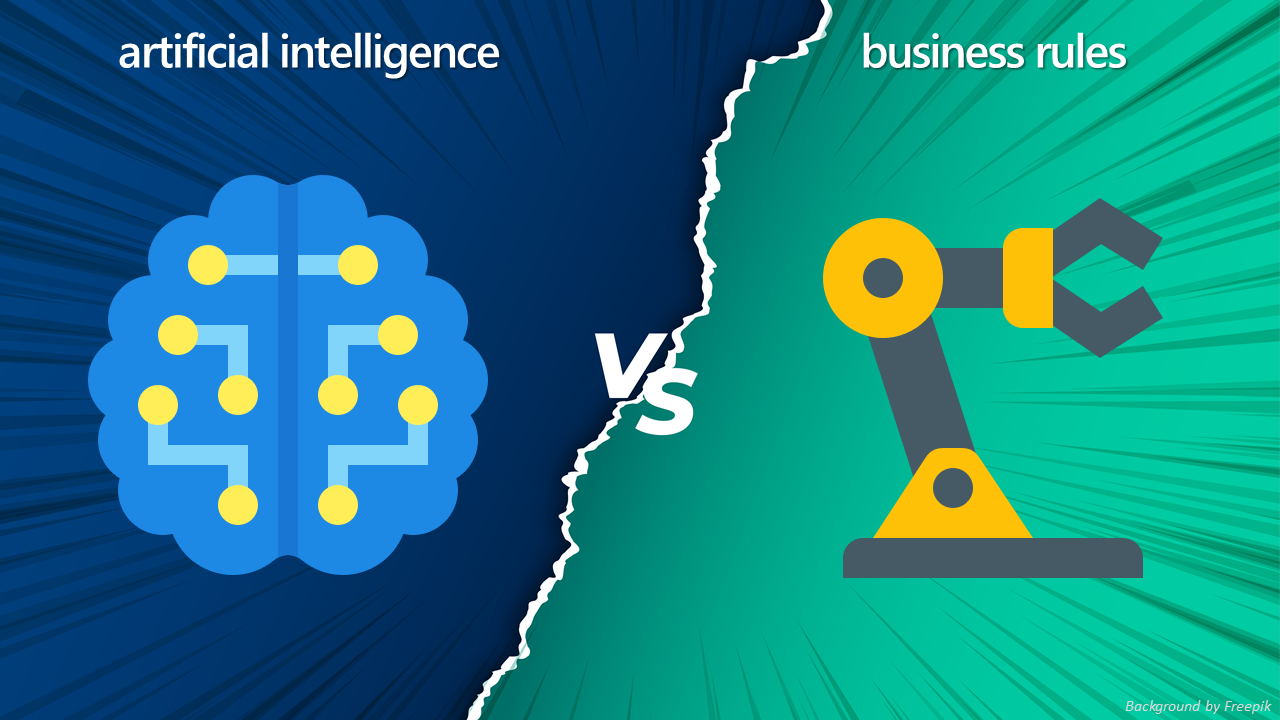
- The gray area between AI, business rules and automation
- Real examples of how AI supports customer journeys
- Breaking siloes is the key to a differentiated, personalized AI service
- How to keep AI-assisted conversations feeling human
- Building the ideal AI-assisted agent desktop
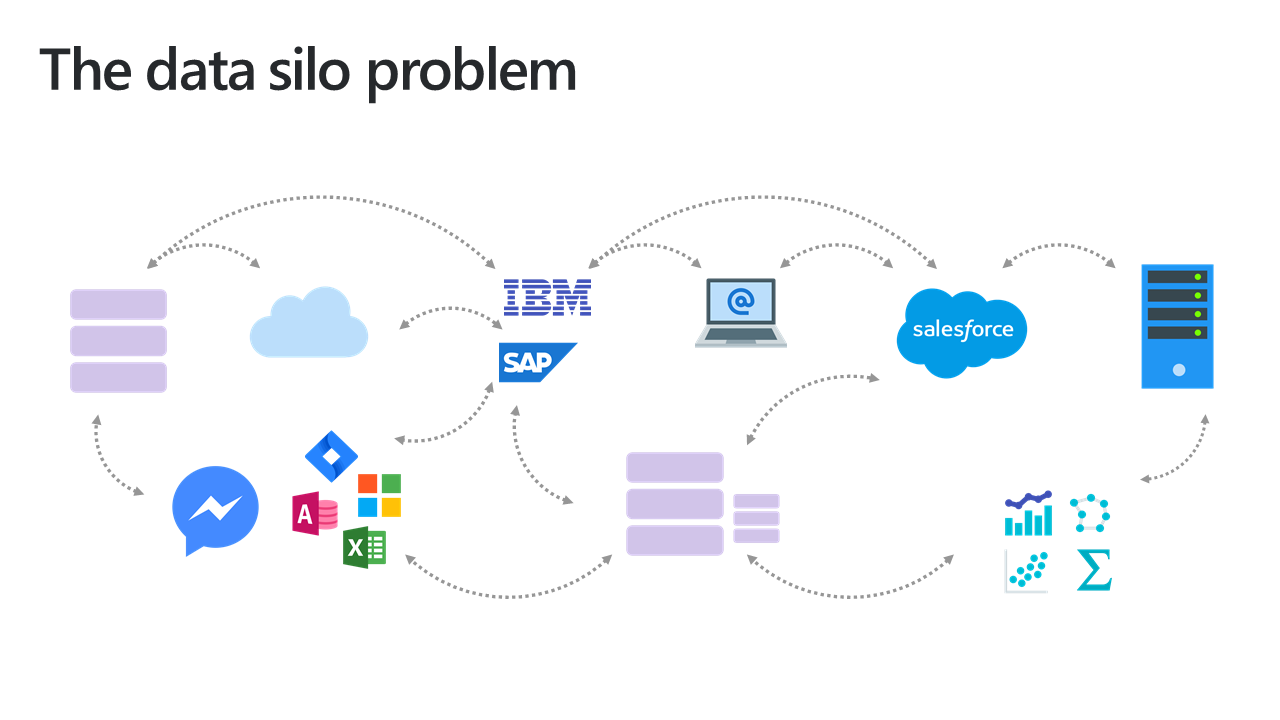
Most companies are already employing some level of automation and intelligence within their customer service organization. But getting to that next level of customer experience requires breaking down data and organization siloes.
Join Maksim Gill, VP of Product at Eccentex, demonstrate the ideal next step in deploying AI for customer service.
View Transcript
Max Gill (00:03):
Hello everybody, my name is Max Gill. I’m the head of product at Eccentex, and I’ll be talking about journey-centric AI today. If you can turn your attention to the picture on the right before we get started: my background is primarily in the case management and low-code platform space, and I run the Eccentex AppBase product team, which is our platform for delivering what we call digital business apps. Our customers use our platform to build applications like customer service, help desk, complaints, claims management, back-office automation, and much more. Because we’re oftentimes the glue between the front office, the back office, and the departments in between, we’re able to track what the customer wants to do throughout its entire journey. And we’re going to see in this webinar today how being able to track the entire journey provides a unique opportunity to use AI in assisting employees. We call that merging the human workforce with the digital workforce.
Max Gill (01:15):
We work with companies and government agencies worldwide to help not only deliver these types of applications, but to enable them to continuously improve them or make new apps. Before I actually start talking about artificial intelligence, I want to quickly talk about automation in general, because oftentimes the goal of an AI project within an organization is to gain some sort of automation. An example of non-AI-driven automation would be something like the system emailing the customer automatically after they complete an order. Something else has some sort of AI in it, such as someone trying to deposit a check through a banking app, where the system will automatically make sure the images aren’t blurry. It can even extract what was handwritten on these checks and compare it with what the person wrote in the app, perhaps even making sure the check is real. There’s also a very complex use case of actually having a full-on conversation with a customer through a chatbot, for example.
Max Gill (02:22):
That is also a form of automation because it’s automating what would have been a conversation between a live agent and a person. And those chatbots you’ve probably seen today can understand natural language, help guide you through a process, show you where things are, initiate a refund, and really do a lot of things. On this slide, we see the customer-centric view of an organization, and there are a lot of processes that the customer can be involved in. Sometimes they’re in multiple processes at once. There are lots of opportunities within each one of these processes to automate. Whether that automation is AI or not AI is a whole different question. We’re going to tackle that throughout this presentation. But we’re also going to talk about employee-assisted AI, because while there are lots of opportunities for automation in general, there are also many opportunities for artificially intelligent assistance to an employee. For example, non-AI assistance would be automatically loading everything about the customer onto the agent’s desktop screen when the customer calls the call center. That’s a form of real, non-AI-driven automation of what would otherwise require the agent to look up the person’s name and click between different systems. A more AI-driven example is suggesting the next best actions for a specific problem while speaking to the customer.
Max Gill (04:11):
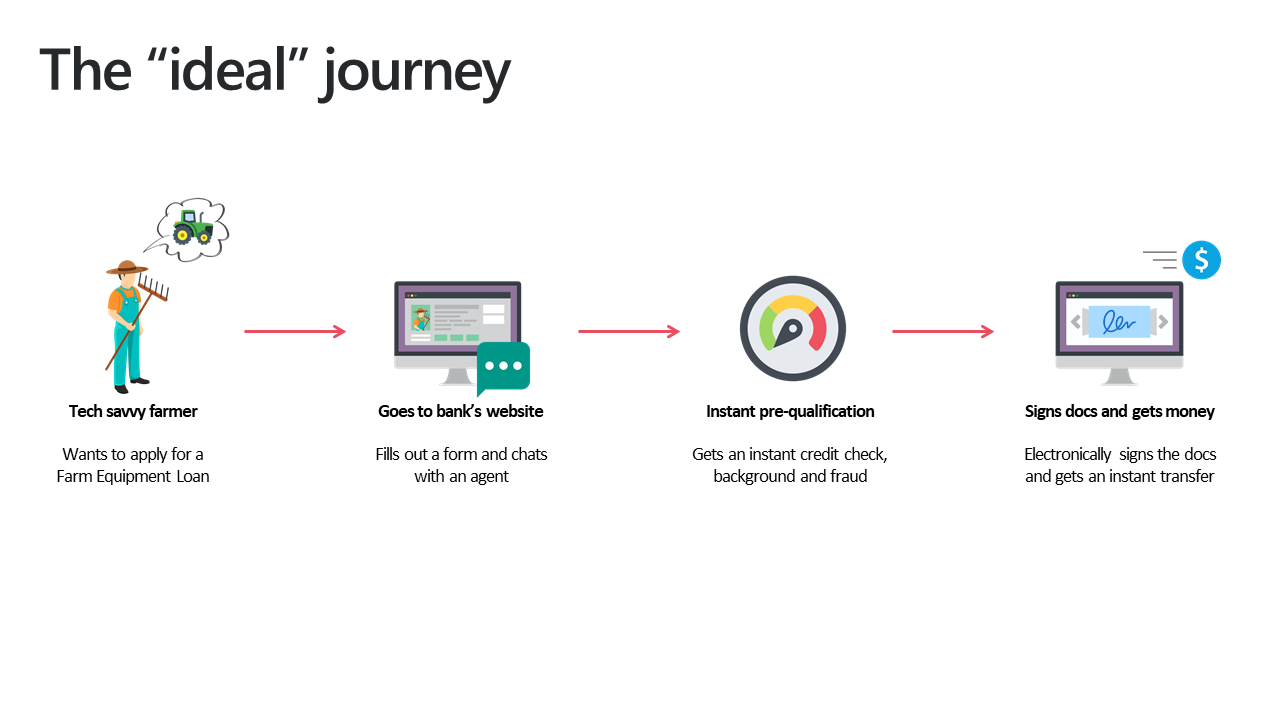
Throughout this webinar, we’re going to explore where there are opportunities for automation within business rules versus artificial intelligence, and how those two can work together. We’ll start with a typical journey that a customer can be on. In this situation, a farmer is interested in purchasing a tractor, but also needs to get financing either from a bank or from the tractor company to do so. We call it a journey, not a task or a process, because it’s more complicated than just that. It’s a whole journey. And the journey begins not when they apply for the loan, but when they’re first interested in purchasing the tractor, because that’s the first opportunity that the bank or the tractor company has to start marketing to the farmer. Assuming the farmer is tech-savvy, finds a proper bank, goes to the bank’s website, and fills out the form—maybe having a couple of chats here or there—they fill everything out, finish, and submit. Because they are very well qualified for this loan, and because the bank has all the proper integrations and things like that, they receive an instant prequalification.
Max Gill (05:14):
The farmer then gets a bunch of paperwork, fills it out online, and the money gets transferred to their account. This seems like a fairly straightforward process. There are clearly opportunities for automating most of it in this linear fashion. Of course, maybe there are some exceptions here or there, but it looks simple enough that we can model it out, and we can use AI or non-AI technology to actually do it. The problem is that it doesn’t really go that way. In reality, the journey looks something closer to this.
Max Gill (06:05):
We can see that the complexity here is much higher than it originally seemed from just a high-level view. There are a lot of touchpoints between the farmer and the bank. They can start a chat and end in a call. They may chat multiple times or call multiple times throughout the day. They may email. They may even use more modern communication channels like Facebook Messenger or Twitter. They may start the application for a loan multiple times and abandon it before they actually do end up completing it. And when they do complete it, if the score is not phenomenal or terrible enough to automatically disqualify them, there is additional work that needs to be done to actually decide whether to grant the loan. People have to get involved. Most cases have multiple tasks with multiple stakeholders who need to verify or approve a loan like this.
Max Gill (06:57):
The bank may actually outsource parts of these tasks to different vendors or even different countries. Oftentimes a bank requires that things be signed physically, so they may mail documents to the farmer and require them to come into the bank to have things notarized. They may send a form out to get signed, but the farmer forgets to sign one part of it and sends it back. Then the bank has to contact them again. They may request additional verification, such as proof of insurance. They may want bills of sale to make sure the farmer has a viable way of paying the loan back. We can see it’s a pretty complex process when all the opportunities and exceptions are taken into account. And it gets even more complicated if the farmer is on multiple journeys at once with the same bank. For example, they may be on a dispute journey because they have a credit card with the bank and are trying to dispute a charge while, at the same time, trying to get a new loan.
Max Gill (07:53):
Even from a conversational AI standpoint, when the farmer calls in, it may not be clear what they’re calling about, and that complicates the way the conversational AI can respond adequately. If the farmer is frustrated because they’re calling back multiple times and can’t get the answers they want, having AI take care of the entire engagement is high-risk, because one bad customer service experience is a lot more detrimental than a number of good ones. But AI is really good at a number of parts that help automate this process, or at least assist in automating it. From a low-hanging or more obvious standpoint, AI can help in scoring. Obviously, there are scoring mechanisms already in place. Some are more structured and rules-based, while others have machine learning that can analyze the behavior of how farmers in their demographic actually pay back loans. Maybe they use more big-data capabilities, like forecasted produce prices.
Max Gill (08:59):
These are all things that a human can theoretically do, but with so much data coming in and so much variety in that data, it’s very difficult for a human to sit there and model it. AI is great for enhancing that type of scoring mechanism. We also see a lot of opportunity when a call is made or a communication channel is opened between the farmer and the bank, in prioritizing that case or conversation. If, for example, during the automated portion of a call, the farmer’s voice is perceived to be emotional or angry, that may place them at a higher position in the queue to talk to a real person. The same thing applies to emails. If there’s a nasty email about how frustrated they are, that may go higher in the queue for somebody to look into. And we see AI’s huge role in assigning work—what we call predictive routing—which is assigning work to the correct agent to speak to or, down the line, to the correct people in the back office to process the work.
Max Gill (10:05):
We can use simple things with no AI, like assigning work to the least busy person, or we can use AI to understand what type of person may have the right skill set. Maybe some people are better at handling angry customers, people in a specific region, or a particular type of equipment that they’re trying to finance. Maybe they have special knowledge about that. AI can go through a lot of behavior and track how every employee handles different tasks, then determine what type of tasks are best for them to complete. There are also obvious opportunities for non-AI-driven automation. For example, when you call or speak to an agent, preloading all the information about the customer on the agent’s screen is a great form of automation that is not usually AI-driven. Generating communications back and forth, such as generating a summary of a call or automatically sending or resending a verification form, is another. Then there is what we like to call employee-assisted AI, which is a great opportunity for AI in general. It doesn’t do a specific task so much as give additional information or insights to employees while they’re working on a case like this.
Max Gill (11:24):
For example, if the customer is on a number of journeys and they call an agent, the system or AI may predict what the person is calling about, thus preloading all the information or giving the agent insight into the situation before they even pick up the call. Or, during the call or while working on the case in the back office, it can provide next best actions. The AI can investigate how previous cases were resolved, how successful or unsuccessful they were, and perhaps say that in most situations a particular type of verification can be excluded because it will be completed later, thus saving time. Next best action is a huge opportunity for AI here as well. And something that may be slightly less AI-driven, but still has some AI, is the recommendation of knowledge-base articles that the employee can read while on the call or while working on the case.
Max Gill (12:23):
For example, it can automatically take things like the region, the type of equipment, and the current state of the case to provide the most up-to-date information for the employee to read. We’re going to use customer service as an example because it’s a great way to illustrate employee-assisted AI. Up here, I have a quote from Microsoft. It says, “By 2025, as many as 95 percent of all customer interactions would be through channels supported by artificial intelligence technology.” That doesn’t mean that every entire interaction will be through AI; it may be employee-assisted AI or completely AI. As we saw in the previous slide, there are many interactions that still occur, and will continue to occur, where AI alone is not applicable.
Max Gill (13:09):
Examples include complex situations, situations with high emotions, or situations with high risk for the company. On average in the industry, it costs about a dollar a minute to talk to somebody on the phone. So remember that the next time you have a problem with one of your cell phone providers and spend 43 minutes trying to argue over a $10 surcharge you don’t agree with. But even other channels, like chat, cost about half of that per minute because the agent can handle multiple chats at once.
Max Gill (13:51):
At 50 cents a minute, it’s still pretty expensive. Self-service is considered to cost 10 cents or less per task or action. That includes going to a portal and filling out information, or actually having a conversation with a chatbot. Clearly, there is a push away from talking to an agent on the phone and toward self-service, but that’s not always possible. With employee-assisted AI, we can provide additional insights or information to make the call faster, provide a better level of service, or generally give employees more information so they can provide a level of care that feels more personalized to the customer.
Max Gill (14:40):
With advances in natural language processing, we also have the opportunity for robots to listen to a real conversation and provide live suggestions to the employee during the actual conversation. I also want to note that conversational AI is not always applicable, even for simple situations, in cases where there is a high need for empathy or an actual emergency risk. For example, if you’re calling a life insurance company because of a death, even if the process is pretty straightforward, the customer’s emotional level is very high, and you can’t recreate much empathy between a robot and a human these days. And sometimes in an emergency—for example, calling 911 or reporting a gas leak—people genuinely want to speak to a human.
Max Gill (15:32):
And this is one of my favorite jokes. I don’t particularly agree with all of it, but I think it’s pretty funny.
Max Gill (15:41):
We’re going to dive into an example right now. We’ll quickly step away from the farmer journey and talk about a general customer support journey that a customer may be on with a bank. In this situation, somebody calls a bank to complain about a fee they don’t agree with. From an AI standpoint, while the customer is talking to the robot, the system can analyze the conversation right away, understand how angry they are, perhaps analyze the customer value from the bank’s standpoint, and prioritize them correctly within the call queue. Then, when the call actually gets to the agent, AI can assist the agent with data and insights that help them not only solve this person’s problem, but also answer additional questions they may have. That’s what we would consider a super agent. Everybody expects that these days: when you call somebody, you don’t get transferred from department to department; this one person should somehow be able to solve all of your problems. There’s also a big push in the industry to make customer service a profit center—a revenue-generating center.
Max Gill (16:51):
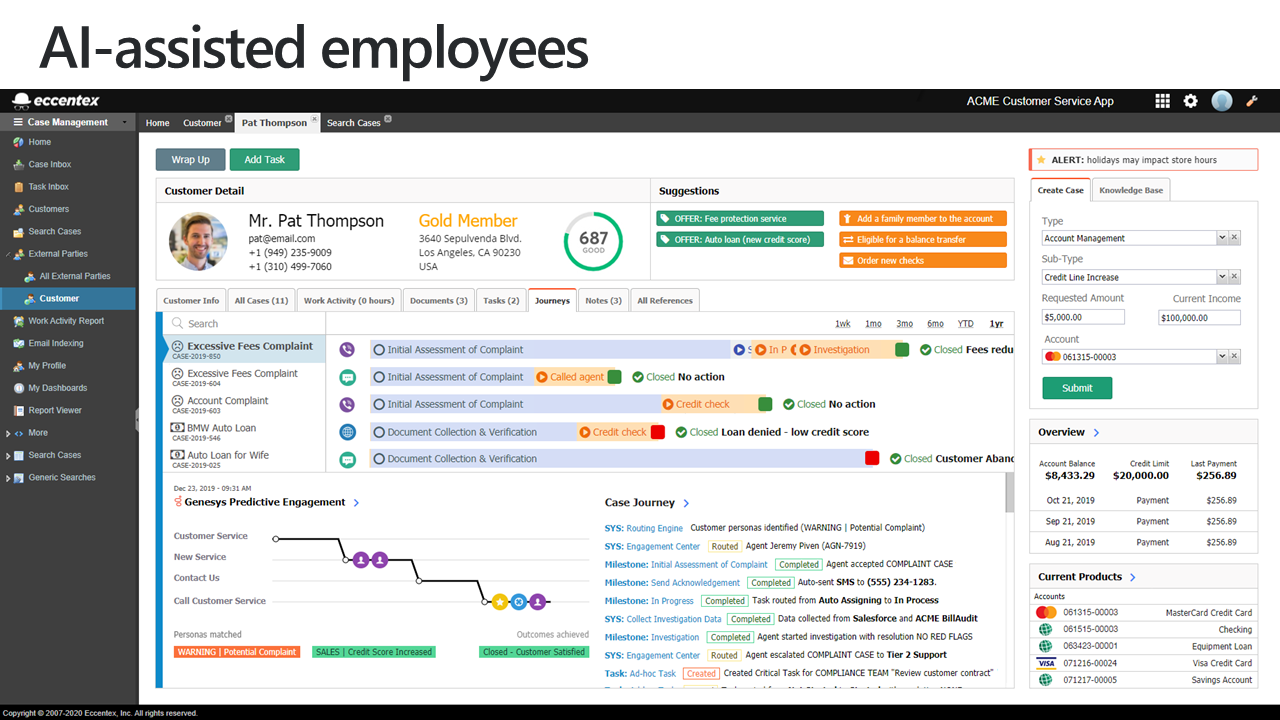
You may call the bank to raise the credit limit on a credit card, and they may end up selling you another credit card. Or, if you’ve ever traveled and called to inquire about international call rates, you may end up signing up for a plan you weren’t expecting. Having agents capable of solving many customer problems without transferring them, while also upselling, is a pretty high bar to reach. They may not have all the training to do it. They definitely don’t have time to review all the customer’s journeys and other information before the call comes in. AI-assisted employees are a great way to enable these super agents. This is a screen an agent may see when a customer calls in. It’s a lot of information, so I’m going to pause here for a few seconds. The agent sees pretty much all the information they need to answer any questions the customer may have.
Max Gill (17:51):
The agent can also take additional actions if necessary. This mashup of all the information and actions is what we call the customer 360 view. And this is itself a form of automation. If you’ve ever tried to tell an agent about something and heard, “Wait a minute, I have to look in this system; I have to go into that system,” all that clicking between systems is manual work that’s prone to error and takes time. Automating the collection of all this information onto one screen is critical to providing a good customer experience. For example, here we have a list of all the transactions the customer has had, products they’ve had, and any ongoing matters. Actions that the customer may be calling about or need can be here as well.
Max Gill (18:52):
Unless you know specifically what they’re calling about, they may have a complaint and also need a credit line increase; multiple things may be happening. Being able to quickly create everything from one place, including work that goes to the back office or other departments, is also a form of automation. If we zoom out a bit, we see a very important part right in the middle that explains all the other journeys the customer has been on. This is perhaps the most important, not only for the agent’s sake, but for any AI involved along the way. Here we see that the customer has previously called with a complaint about fees, perhaps another account complaint, and tried to open an auto loan that was denied because the credit score was too low. The customer also tried once before but abandoned the application.
Max Gill (19:47):
We have some insight into the customer’s behavior at this bank in general. We also see the results of all these journeys and how long the different steps take. This is important for understanding where the customer’s call is coming from and what they may potentially be calling about. From an AI standpoint, if there was an opportunity to perform emotional analysis while the customer was talking to the robot before connecting to the agent, that information can appear in the summary section. It might provide an insight such as, “This person is frustrated,” or, “This is the third time they’ve called within the last couple of days.” If there’s any indication of what they may be calling about, that can appear here as well and give the agent some sense of what’s going on during the call.
Max Gill (20:40):
I’m going to focus primarily on one part of the screen: the suggestions portion. This is sometimes called next best action, or simply suggestions. Without knowing immediately what the customer is calling about, these are things that help guide an agent, offer an opportunity to upsell, or support preventive maintenance on the account. The first thing we see is the fee protection service. This was offered because the customer has already had two excessive-fee complaints this year. The fee protection service really only makes sense if the fees were actually the customer’s fault and not the bank’s fault. We had two complaints here. One time there was no action, so the customer had to pay. The second time there was a fee reduction after an investigation.
Max Gill (21:34):
This type of fee protection service only makes sense if the customer perceives that the fees were their fault and are likely to happen again. Even if, in reality, both times were the customer’s fault, the bank may have reduced one fee for account management and customer satisfaction, making it seem as if it were the bank’s fault rather than the customer’s. Those types of details affect whether the offer makes sense. If you offer someone a protection service for something they perceive as your fault anyway, they’re not going to take it very well. We can also use additional information for the second offer here: an auto loan. The customer’s credit score has increased, based on information the bank has access to. We’ve seen that the person has requested a loan before. One time they abandoned the application; another time they were denied because of a low score.
Max Gill (22:30):
Perhaps, based on analytics in general, the bank knows that customers in this demographic may be willing to buy a car. Maybe they know the customer’s car is getting old, or they know other information about that demographic that makes this a potential offer important enough to mention. If we zoom out, we’ll see many opportunities for AI on this screen. You can’t provide an unlimited number of offers to the customer—not only because it takes a lot of time, but because it will frustrate the customer. They may be calling about a problem and become unhappy that you’re also trying to sell them something. You should focus only on upsell opportunities that are most likely to succeed. Having AI go through all the journeys and understand the customer’s feelings toward various offers, while also using data from different customers and demographics, is a driving force behind upselling in customer service.
Max Gill (23:28):
Of course, you may be able to boil this down to a business rule. For example, if a customer has had two excessive-fee complaints this year, and both times the customer thought the fees were their fault, automatically make this offer. But you can see the number of different correlations, exceptions, and business rules that can occur. For example, maybe they have three excessive-fee complaints, but only two were their fault. At what point does the situation become simple or clear enough to write down as a business rule?
Max Gill (24:19):
When all those business rules become too hard to manage, AI is great at this type of analysis because it can analyze millions and millions of customer transactions. As you’re measuring and offering these things, you can offer a fee protection service, and if the customer declines it, you can put that in the system. The system now knows that you’ve tried it and it didn’t work. It can use that for future predictions—not only for this specific customer, but for future customers. It’s important to note that suggestions can change throughout the call. You can imagine these are the suggestions offered at the start of the call, based on the AI’s interpretation beforehand.
Max Gill (25:10):
If I end up creating a fraud case during this call, those suggestions must change, because it doesn’t make sense to start offering a new auto loan if the customer is complaining to the bank about someone stealing their money. Simply writing out all those business rules—if these suggestions exist, but then this happens, remove that suggestion or add a new suggestion—becomes vastly unwieldy. You may be able to implement many of them as business rules, write them out, and use matrices and business rules engines, but the number of possible variations, combined with additional information like emotional analysis and text analysis, makes those business rules very difficult to update constantly.
Max Gill (26:03):
This is where AI is a huge help, because it can continuously learn what kinds of offers were made throughout every call, what types of offers were ignored by agents, and generally interpret data that a human doesn’t have the time or ability to manage. There’s a huge benefit to being able to structure what was done during a call, during the processing of a case, or throughout the entire journey. Simply knowing that an offer was made to a customer during a specific type of journey can help the system know that, next time in this type of journey, these offers should be adjusted. One of the biggest necessities for a system like this is the ability to track journeys from end to end and correlate the actions that the agent or customer has taken with those journeys. And with that, thank you for joining.